A machine tool can keep sound mechanics long after its CNC control has gone out of production. Rather than replacing the whole machine, you can then modernise its control side: this is called a retrofit. Here is what the operation involves, the reasons behind it, what to check before considering it, the alternatives, and the questions to ask when buying a used machine that has already been retrofitted.
What a retrofit involves
A retrofit means modernising existing equipment, usually older equipment that is no longer produced. On a CNC machine tool, a control retrofit generally covers:
- the CNC control itself: computer, screen and operator panel;
- the drives, or amplifiers, that power the axes and the spindle;
- the axis motors and the spindle motor;
- the electrical panels and cabinet;
- sometimes the position measuring systems: linear scales and rotary encoders.
Some control manufacturers supply the whole motion system, from the control to the motors and measuring systems, so that all these components work in sync.
What is kept is most of the mechanics: the bed, the guideways, the slides. That is the whole point: the stable structure of the machine is reused, and on a large machine you avoid the foundation work a new machine would require.
Why retrofit a control
Obsolescence and spare parts
This is the most common reason. When assemblies can no longer be supplied, a retrofit replaces those for which no spare parts exist and secures the supply of parts. Parts for an old control become increasingly difficult, and sometimes impossible, to find. At Heidenhain in the United States, for example, the stock of original replacement parts covers current models and those up to 20 years old: beyond that, the question arises.
Reliability
Replacing ageing electronics aims to reduce unplanned downtime caused by failures and to extend the service life of the machine. Recent controls also include diagnostic functions that make troubleshooting easier.
Programming habits
A shop that already works with one make of control can choose the same one for the retrofit: operators move from one machine to another without extensive training, and existing programs are more likely to be reusable. And since the mechanics stay the same, setters keep their bearings on the machine itself.
New functions
A recent control brings functions that were not available originally: Ethernet connection to the shop network, block look-ahead for machining complex surfaces, dedicated 5-axis functions, more flexible programming at the machine. A retrofit can also be used to integrate an old machine into a modern IT environment.
What to check first
A retrofit assumes a mechanically sound machine. A new control does not correct wear: it drives the mechanics as they are. The process therefore starts with an analysis of the machine itself:
- geometry: straightness of travel, squareness between axes;
- slideways and guideways: scoring, seizure marks, worn areas;
- ball screws: backlash when reversing direction, noise, tight spots;
- spindle: bearing noise, heating, runout;
- lubrication and hydraulics, on which the life of all the above depends.
If these assemblies need reconditioning, that work comes on top of the retrofit: better to know before deciding.
Alternatives to a retrofit
A retrofit is a major undertaking. Depending on the condition of the machine and the availability of parts, there are other options:
- Repair: control manufacturers repair defective devices, with fault analysis, cleaning, updating and functional testing.
- Replace the faulty part with an original spare part, as long as the manufacturer still supplies parts for that generation.
- Keep the original control when it works and parts and repairs remain available. You avoid retraining and keep the machine's original configuration. It is wise to keep backups of the machine parameters and programs.
Buying a used retrofitted machine
A retrofitted machine combines mechanics from one generation with a control from another. Before buying, ask a few questions:
- Who carried out the retrofit? It may have been done by the machine manufacturer, as part of its after-sales service, or by a specialised company. The manufacturer usually knows the machine and its original delivery condition better; a specialised company may offer more flexibility.
- When, and with which control? Note the make, model and software version, then find out what support is offered for that control and for how long.
- What was replaced? The control only, or also the drives, motors and measuring systems.
- What documentation? Updated electrical diagrams, manuals for the new control, parameter list. Original diagrams that no longer match the wiring make any troubleshooting harder.
- What backups? Machine parameters, PLC program, part programs.
- Does the control match your habits? If your shop already uses the same one, start-up is easier; if not, plan time for training.
At Fimotec
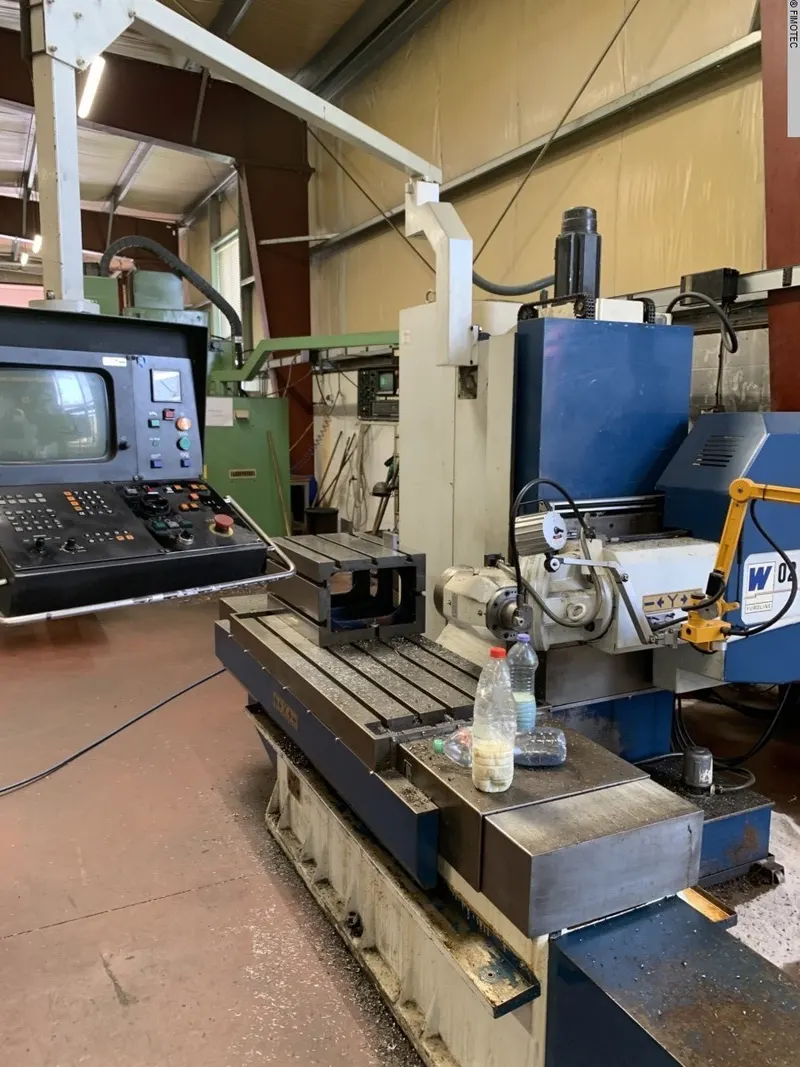
Each machine page in our stock shows the control recorded on the machine, alongside the specifications recorded on the machine and, when available, the manufacturer's data with their origin. For example, the page for this 1991 Lagun FBF 1200 milling machine lists a Heidenhain TNC 355 control. The price is given on request and every enquiry receives an answer within 48 working hours: ask your questions about a machine. If you want to part with a machine, part exchange is studied case by case: sell your machine.