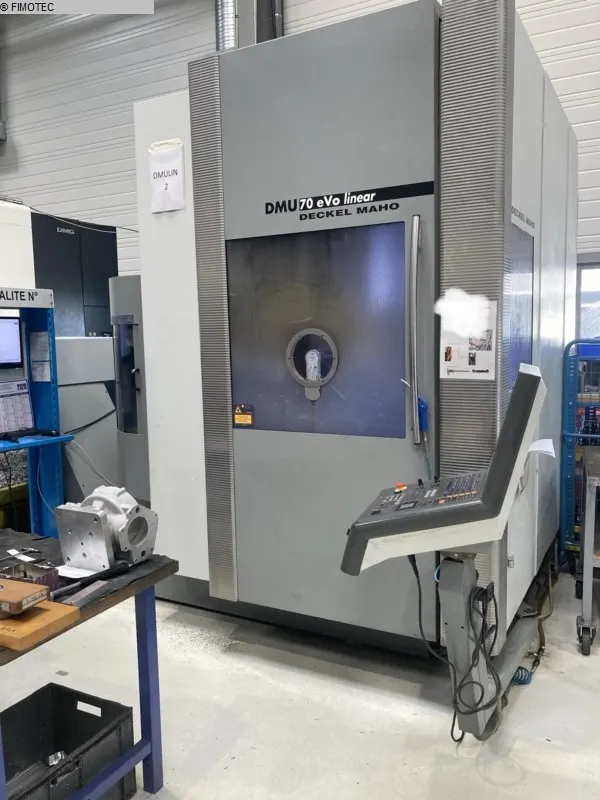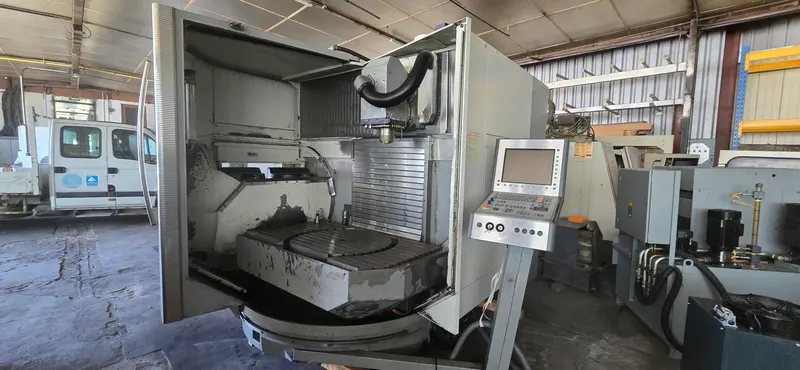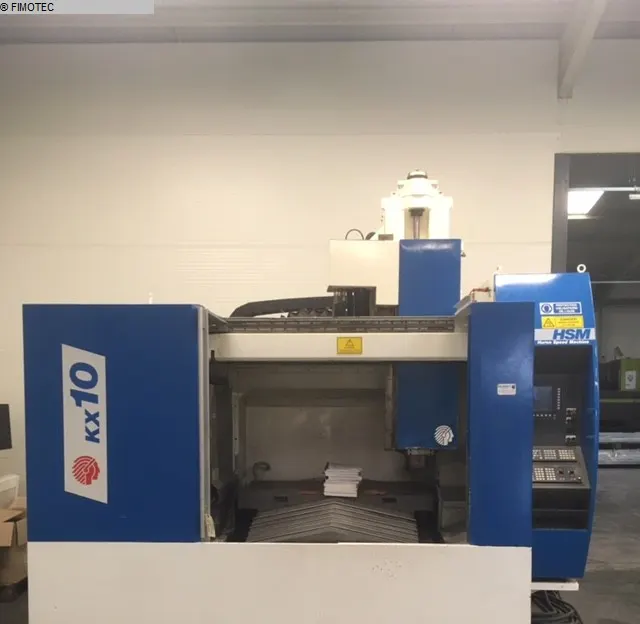
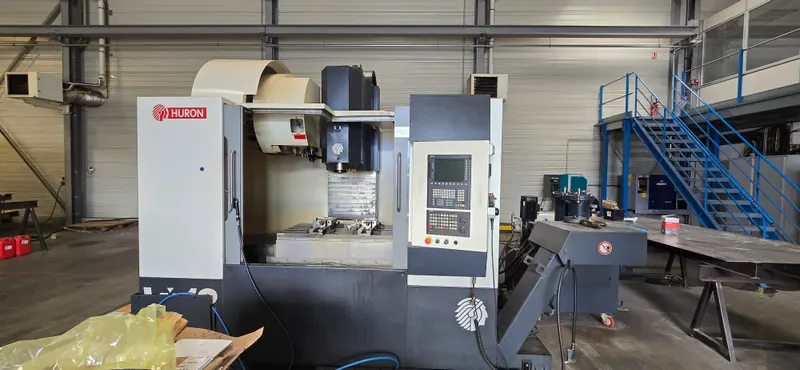
A machine tool often weighs several tonnes, needs power, air and coolant, and must remain accessible for production as well as maintenance. Its arrival is therefore prepared well before delivery day. The French occupational safety institute INRS recommends specifying, from the purchase stage, the conditions of the installation site: layout of the area, handling means, energy connections, lighting, access for maintenance. Here are the points to go through.
Gather the machine data
It all starts with the documentation: weight, dimensions, location of the centre of gravity and lifting points, layout drawing, electrical and pneumatic requirements. The manufacturer's instruction manual normally describes the transport, installation and commissioning procedures: it is the reference. If it is missing, ask the seller for the information available before planning anything.
Floor and foundation
The floor must bear the weight of the machine, concentrated on its support points, as well as that of the parts and peripherals. Check the thickness and condition of the slab at the planned location. If the documentation calls for a dedicated foundation or a foundation drawing, have it built before delivery. If in doubt about the floor's strength, call in a structural engineer.
Access and route
Survey the machine's route, from the unloading area to its location:
- width and height of doors, including for the loaded handling equipment;
- floor strength along the whole route;
- obstacles to move, aisles to clear;
- a clear, marked set-down area.
Lifting and slinging
The INRS slinger's handbook recalls a few basic rules for any lifting operation:
- know the weight of the load and the position of its centre of gravity before choosing the slings;
- use the lifting points provided by the manufacturer;
- choose accessories whose working load limit exceeds the weight to be lifted, taking the sling angle into account: INRS advises aiming for an angle below 30° between a leg and the vertical, and a spreader beam reduces this angle;
- visually inspect each accessory before use and set aside any whose marking has disappeared or that shows a defect;
- never stand under the load, or between the load and a fixed obstacle;
- wear safety shoes, gloves and a helmet.
INRS also states that operators in charge of slinging must have received suitable training. For a heavy or bulky machine, lifting is a trade of its own: entrust it to an equipped rigging company.
Transport locks
For transport, moving parts of the machine may have been locked in place: slides, table, head, turret or doors depending on the model. Find the list of these locks in the manual and the procedure for removing them. Do not move any axis while they are in place, and keep them: they will be needed for a future move.
Levelling and anchoring
Once the machine is set down, it must be levelled. On a lathe, the aim is not so much for the machine to be perfectly horizontal as to avoid any twist in the bed: a precision level is then used as a comparator to detect and correct twist, then bending along the bed when the machine rests on more than four points. Depending on the model, the machine stands on adjustable pads or is anchored to the floor: follow the manual.
Room around the machine
A machine's footprint is not limited to its frame. Allow room for:
- fully opening the doors and covers;
- the chip conveyor and its collection bin;
- the electrical cabinet, whose door must be able to open;
- the coolant tank, which has to be emptied and cleaned;
- maintenance work and tool setting;
- bringing in parts and removing finished parts.
INRS indeed lists maintenance requirements, access and working conditions, among the points to define when buying a machine.
Electrical connection
Note from the documentation or the rating plate the machine's voltage, frequency and connected load, then compare them with the workshop installation. Sizing the supply line and its protection is a job for an electrician. INRS reminder: work on or near electrical installations is preferably done with the power off, and the people doing it must hold the required electrical qualification.
Compressed air
If the machine uses compressed air, for example for air blast or pneumatic components, the manual gives the expected pressure and air quality. Check that your network can supply them at the planned location, and plan an outlet nearby.
Coolant
Cutting fluids fall into two families: neat oils, mainly lubricating, and water-based fluids, mainly cooling, which generally contain 90 to 98% water. Use the type of fluid intended for the machine and prepare it following the product manufacturer's instructions. These fluids can cause skin and respiratory conditions: INRS recommends choosing the least hazardous products possible and giving priority to collective protection.
First power-up
Commissioning follows the manufacturer's manual, step by step. Check oil and lubricant levels, make sure the transport locks have been removed, then test the emergency stops, doors and guards before moving the axes slowly. INRS advises analysing the risks on site, trying out each function and training production, maintenance and cleaning operators before production starts.
At Fimotec
Fimotec offers used machine tools in stock in Haguenau, France. Each machine page lists the specifications recorded on the machine, such as weight or dimensions when known, and, when they exist, the manufacturer's data. Transport and installation can be arranged on request, and every request gets an answer within 48 working hours. To prepare a machine's arrival, contact Fimotec.