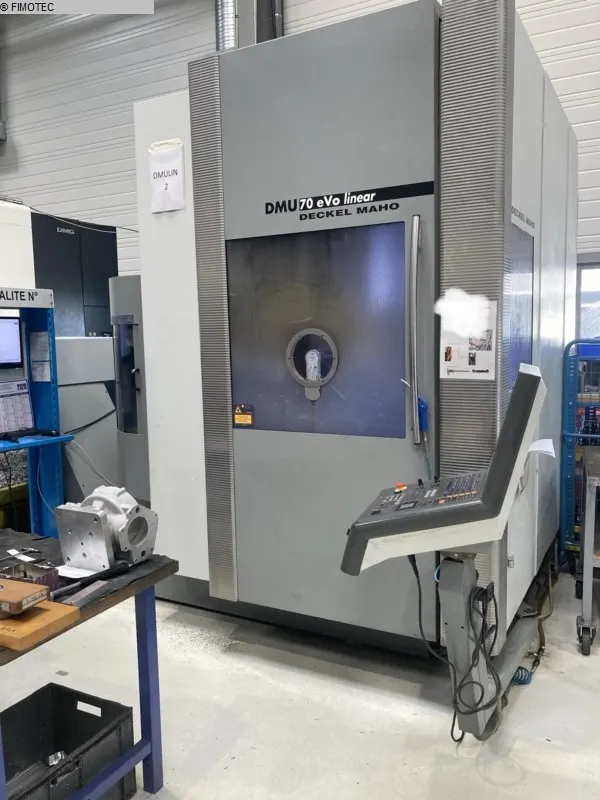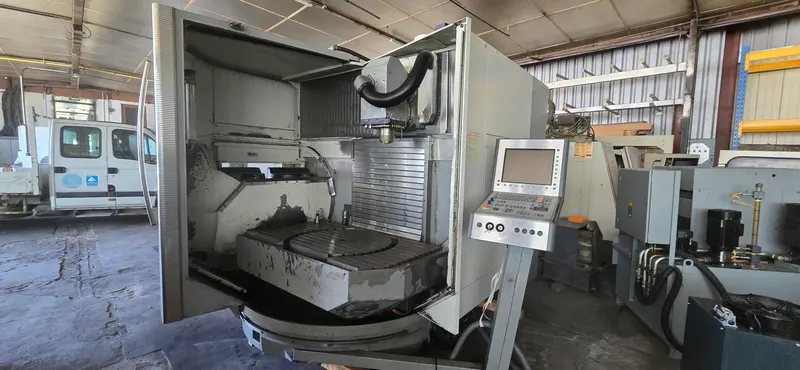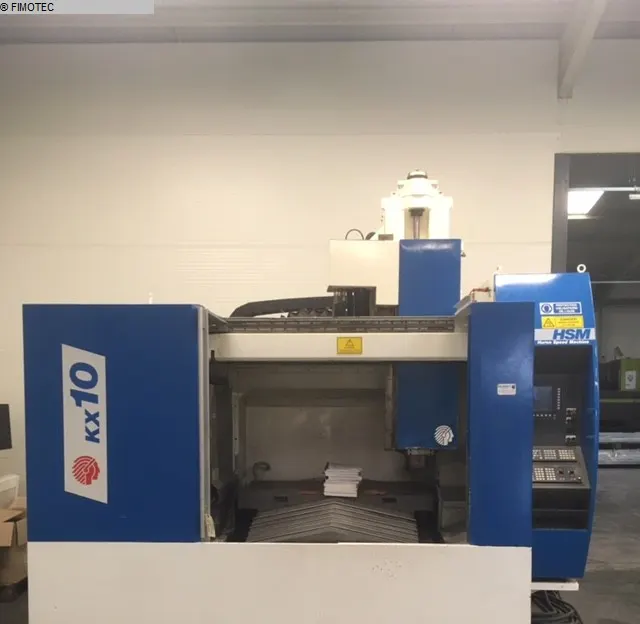
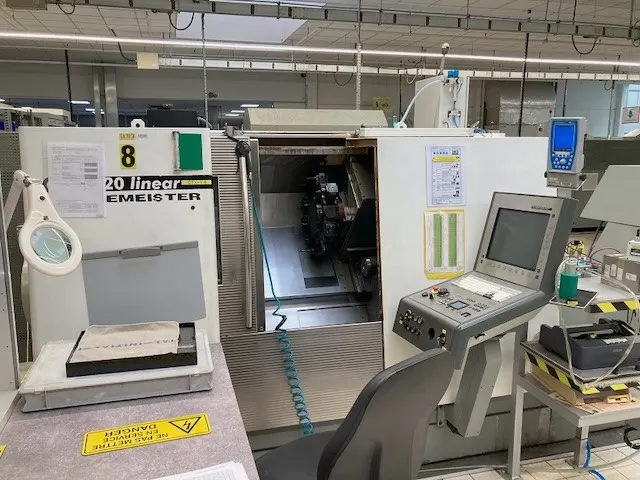
Two machines of the same model can have very different values on the used market. The price of a used machine tool cannot be read off a chart: it results from a set of technical, documentary and logistical factors. Knowing them helps you compare offers, ask the right questions and, if you are selling, present your machine at its best.
The age of the machine
The year of manufacture is a first indication, but not the only one. A well-maintained older machine can remain productive, while a newer but heavily used one may be more worn. Age matters mostly through what it implies: the generation of the CNC control, parts availability, the level of equipment, and the technical rules that apply, which are those in force when the machine was first placed on the market.
Operating hours and past use
When an hour reading is available, power-on hours or spindle hours, it tells you how intensively the machine has been used. The type of work matters as much as the figure:
- continuous heavy roughing or precision finishing;
- materials machined;
- one shift or several;
- regular, documented maintenance or ad hoc repairs.
A consistent maintenance history is more reassuring than an isolated counter reading.
Mechanical condition
This is often the deciding factor for buyers: spindle, backlash and geometry of the axes, slideways, tool changer, hydraulics. Objective measurements go beyond visual impressions, for example checking backlash with a dial indicator or running a ballbar test, which highlights geometric, dynamic and play-related errors. A machine whose condition is documented is easier to compare than one you know nothing about.
The CNC control generation
Controls evolve through successive generations. At Siemens, for example, the Sinumerik 840D appeared in 1994, then the Solution Line range (840D sl) in 2005, with interfaces unified on Industrial Ethernet/Profinet; in between, the ShopMill and ShopTurn interfaces made shop-floor programming easier. The control generation affects:
- how you program: ISO code, conversational shop-floor programming, import from CAM;
- connectivity with the rest of the shop;
- the availability of electronic spare parts.
Options and equipment
For the same model, equipment makes the value vary:
- number of axes, with a possible 4th or 5th axis;
- tool magazine capacity;
- pallet or workpiece changer;
- tool and workpiece probes;
- through-spindle coolant, chip conveyor;
- tooling supplied: tool holders, vises, chucks.
This equipment has value if it matches your production; an option you will not use adds nothing.
Brand and market demand
Some brands and models are in strong demand among machine shops, which supports their value; a rare model, on the other hand, may find a buyer less easily. Demand also depends on the type of machine: a versatile machining center appeals to a wide audience, whereas a special machine designed for a given part targets a specific buyer. A reputation for reliability, the manufacturer's after-sales service and how easy it is to find trained operators also count.
Documentation
A machine that comes with its documentation is easier to recommission: instruction manual, electrical diagrams, control manuals, parameter backup, maintenance history. In France, the transfer of a used machine comes with a certificate of conformity; for a CE-marked machine, the original declaration of conformity and the instruction manual must also be handed over. Incomplete documentation has to be rebuilt, which takes time.
Spare parts availability
Obsolescence particularly affects electronics: components often remain available for less time than the products that use them. On a machine tool, this concerns the control, drives, motors and some circuit boards. When sub-assemblies are no longer supplied, the answer may be a retrofit, that is, modernizing the machine by replacing the components for which parts no longer exist. How easily parts can be sourced for a given model therefore weighs on its value.
Location, transport and rigging
The purchase price does not tell the whole story of the acquisition cost. Depending on its weight and dimensions, a machine has to be partly dismantled, lifted, transported, then installed on a suitable foundation and adjusted. Very large machines are sometimes assembled where they will be used. You therefore need to factor in:
- distance and mode of transport;
- site access and lifting equipment;
- dismantling, reinstallation and leveling;
- the lead time before the machine is running again.
Availability of the machine
A machine in stock, available for viewing and for quick delivery, has a particular value for a shop that has an order to fulfil. Conversely, a machine still in production at its owner's site means waiting until it is released and dismantled.
Comparing offers
- Check the scope: machine only, or with tooling, transport and installation.
- Compare machines with similar equipment and condition.
- Ask for the recorded specifications, the available documentation and, if possible, a demonstration under power.
At Fimotec
On Fimotec's website, each machine page lists the specifications recorded on the machine and, when available, the manufacturer's data, together with a tier: "Entry-level", "Production machine" or "High performance". The price is given on request. Fimotec also studies the part exchange of your machine case by case, searches for a machine on request and can arrange transport and installation. Every request gets an answer within 48 working hours.